How to measure your real golf distances at home
By The Home Golfer editorial team · Last updated July 29, 2026
Every distance chart on the internet, including ours, is an average. Averages are built by blending thousands of golfers together, which makes them a fine reference and a terrible way to pick a club. If the chart says a 7-iron goes 145 and yours carries 133, you’ll come up short on every approach and never understand why.
The fix isn’t a better chart. It’s your own numbers. And the gear to get them is finally cheap and small enough to keep in your bag.
The tool for the job: a launch monitor
A launch monitor is the one piece that makes this work. It measures each shot and tells you the carry distance, no guessing off a range marker. Three units sit in the home-golfer sweet spot. We compare them by their published specs and price, not by a review we didn’t run.
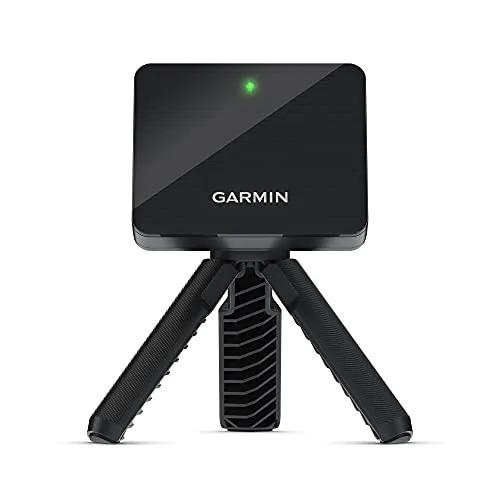
Garmin Approach R10 Portable Golf Launch Monitor
Portable radar unit, 14 metrics, up to 10 hr battery, includes tripod + phone mount.
Plugged In Golf: outdoors, usually within Garmin’s ±1 mph / ±5 yd tolerances; not for club-path work (Golf Insider).
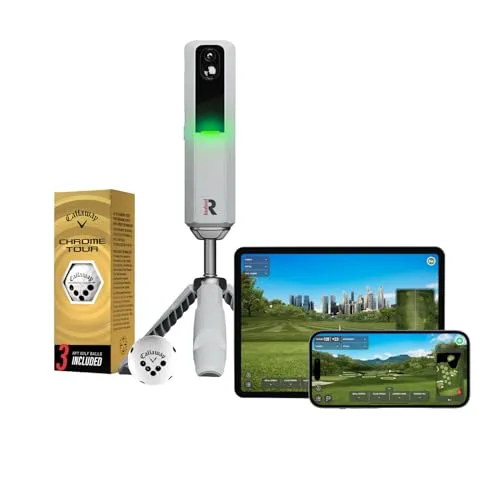
Rapsodo MLM2PRO Mobile Launch Monitor + Simulator
Dual-camera unit, 15 metrics, measured spin rate + axis, includes 3 Callaway Chrome Tour balls.
Breaking Eighty: “best launch monitor under $1,000” (9.5/10); spin is measured only with the marked RPT balls.
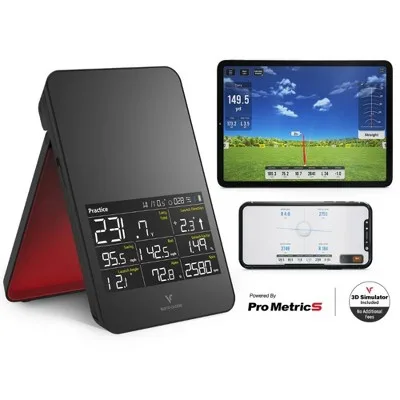
Voice Caddie Swing Caddie SC4 PRO Launch Monitor
Portable unit with a built-in screen, no monthly subscription, 5 free E6 courses.
Plugged In Golf: indoors, in line with a GCQuad on virtually every shot; wedge/driver dispersion noted by Breaking Eighty.
Want the full spec breakdown on the two most popular? The Garmin Approach R10 is the cheapest way in; the Rapsodo MLM2PRO adds measured spin and shot-tracer video.
Prices are approximate 2026 street prices and move over time; the link shows the current price. As an Amazon Associate we may earn from qualifying purchases; it never changes your price. Disclosure.
How to measure your distances, step by step
- 1
Get a launch monitor
A personal launch monitor reads your ball (and usually club) and gives you carry distance per shot. The home-golfer sweet spot is roughly $500–$700, enough to get accurate carry numbers without a range-fixture price tag.
- 2
Hit ten shots per club, at the range or into a net
Warm up, then hit about ten normal, full swings with each club, at the range or into a net in the garage. Ignore your best strike and your worst. You want your everyday shot, not your highlight reel.
- 3
Record carry, not total
Write down the carry distance (how far it flew), not total (which includes roll). Carry is what clears the bunker and is far more consistent than roll, which depends on the fairway and weather.
- 4
Use the average of your normal strikes
Take the middle of your ten shots per club (the number you can repeat) and that becomes your yardage. Build your own gapped chart from it and leave the internet averages behind.
How to record and use your numbers
Keep it simple: one line per club with your repeatable carry number. The moment two clubs overlap (say your 5-iron and 4-iron both carry 165) you’ve found a gap worth fixing, either in your set or your swing.
Re-measure a couple of times a year, and after any swing change. Your numbers drift with the seasons, your fitness, and your gear. That’s the point: a chart never updates itself to match you. Yours does.
Related practice guides
More on measuring your numbers and building somewhere to hit them.
- Golf nets for the backyardNet types, the specs that actually matter, an honest word on safety, and five nets compared by published spec and price.
- Golf hitting matsHow to pick a mat by spec: turf construction, sub-surface cushioning, tee options, replaceable strips. Six mats compared by published specs and price.
- Indoor putting greenRoll-out mats, modular greens and custom turf by listed size, stimp speed and price.
Got your numbers?
Now build a place to use them
A launch monitor plus a net is the start of a home setup you can hit into any day of the week. Here’s what a full simulator bay actually costs.
Build your home setup