Gear, by spec
Golf launch monitors: what they cost and which fits your setup
By The Home Golfer editorial team · Roundup updated July 31, 2026; comparison table checked September 14, 2026
A launch monitor is a device that reads your ball (and usually your club) at impact and hands you real numbers: carry distance, ball speed, launch, spin. In 2026 they run from about $500 for a distance-first radar unit to $7,000 for a tour-grade camera; the home-golfer sweet spot sits around $500–$700. Below are eight units compared by their published specs and price, so you can match one to your room and budget without wading through hands-on hype.
What a launch monitor actually does
The job is simple: turn every swing into data you can trust. The most useful number for most golfers is carry distance (how far the ball flies before it lands), because that’s what clubs you correctly. Every published distance chart is a population average; your 7-iron might carry 133 or 158, and the only way to know is to measure. That’s the whole reason a monitor is the first piece of home gear worth buying.
The units split on how they read the shot. Radar (Doppler) units track the ball in flight and sit behind you, so they want a deeper room. Camera (photometric) units photograph the ball and club at impact and sit beside the ball, so they fit a shallower space. Hybrid units combine both. That difference decides which one fits your garage as much as price does.
For your own numbers, pair any of these with our how to measure your distances at home walkthrough: ten shots a club, record carry, keep the middle.
The six units people actually choose between, spec by spec
Seven columns, six units, and a linked source on every cell. Each figure was read off the manufacturer’s own live page on September 14, 2026. Where a manufacturer publishes nothing, the cell says so rather than borrowing a number from a review site.
| Unit | Price | Tech | Metrics measured | Indoor / outdoor | Subscription | Space needed | Software |
|---|---|---|---|---|---|---|---|
| Garmin Approach R10 | around $600 (source) | Radar (Doppler, 2.4 GHz + 24 GHz) (source) | 14 ball and club metrics, spin estimated rather than measured (source) | Indoor and outdoor; Garmin publishes that indoor accuracy runs below outdoor (source) | Home Tee Hero $9.99 / month or $99.99 / year for 43,000+ simulated courses (source) | Sits 6 to 8 ft behind the ball, plus ball flight to the net (source) | Garmin Golf with Home Tee Hero; 5 E6 Connect courses included; GSPro (source) |
| Rapsodo MLM2PRO | around $700 (source) | Hybrid: dual optical cameras at 240 fps plus radar (source) | 15 metrics, 8 directly measured; spin measured only with the marked RPT balls (source) | Indoor and outdoor (source) | Premium $199.99 / year, $329.99 / 2 years or $599.99 lifetime; first year included with the unit (source) | A little more than 14 total ft indoors: 6.5 to 8.5 ft behind the ball plus 8 ft to the net (source) | GSPro, E6 Connect / E6 Apex, Awesome Golf; 30,000+ courses with Premium (source) |
| Square Golf Home Edition | $699.99 (source) | Camera (photometric): two cameras and eight infrared sensors (source) | Ball and club data including backspin, sidespin, club path, angle of attack, dynamic loft; no club head speed or smash factor (source) | Indoor only; direct sunlight can damage the cameras (source) | None. GSPro and E6 Connect connect with no extra Square fee (source) | Sits beside the ball; no room spec published by Square, so it grades against the camera-class 12 ft minimum bay (source) | GSPro and E6 Connect natively, plus the Square Golf app with 12 courses (source) |
| SkyTrak+ (ST+) | $1,995 sale against a $2,995 list, and marked no longer available (source) | Hybrid: dual Doppler radar plus a photometric camera (source) | 9 ball metrics and 5 club metrics, all listed on the product page (source) | Indoor and outdoor (source) | Basic free with purchase; Essential $129.99 / yr; Core $299.99 / yr; Elite $599.99 / yr (source) | Published bay: minimum 12 ft long by 10 ft wide by 9 ft net height, recommended 15 by 15 by 10 (source) | SkyTrak app with Course Play packs (Foresight 34+, TrackMan 35+ on Elite). Third-party sim support is not published by SkyTrak (source) |
| Bushnell Launch Pro | $2,999.99 indoor and outdoor; $1,999.99 for Launch Pro Indoor (source) | Camera (photometric): auto-calibrating three-camera system with infrared (source) | 8 ball metrics free; 4 club metrics behind a software subscription (source) | Indoor and outdoor; the $1,999.99 Launch Pro Indoor is indoor only (source) | Free tier is limited ball data; Silver $199 / yr adds 5 courses; Gold $499 / yr adds club data and 25 courses (source) | Published simulator-bundle room: 10 ft enclosure wants 12 ft W by 18 ft D by 9 ft ceiling; 8 ft enclosure 10 by 18 by 8 (source) | FSX software tiers; GSPro access requires an active Gold subscription and a separate GSPro subscription (source) |
| Foresight Sports GC3 | starting at $6,999 (source) | Camera (photometric): Triscopic three-camera high-speed system (source) | 6 ball metrics and 4 club metrics named on the product page, measured via included club markers (source) | Indoor and outdoor (source) | None stated. FSX Play, FSX 2020 with 25 courses and FSX Pro Performance are bundled (source) | Foresight publishes the unit footprint (6 in W by 5 in D by 12 in H) but no room dimensions (source) | FSX Play, FSX 2020, FSX Pro Performance, Foresight Fairgrounds, all included (source) |
SkyTrak+ (ST+): Third-party simulator compatibility (GSPro, E6 Connect, TGC 2019) is listed by retailers but we could not find SkyTrak publishing it.
Foresight Sports GC3: Third-party review sites quote "16 measured metrics" for the GC3. Foresight’s own page names 10, so that is the number we print.
Two things in that table decide most purchases, and neither is the sticker price. The first is where the unit sits. The three radar units read the ball in flight from behind you, so Rapsodo specifies a little more than 14 total feet of depth for the MLM2PRO. The three camera units sit beside the ball and need no room behind the golfer at all. In a garage that difference decides which units are even candidates, which is what the room-size calculator grades for.
The second is the subscription column. A Bushnell Launch Pro bought at $2,999.99 and run for free is a ball-data monitor: the four club metrics are behind FSX Gold at $499 a year. SkyTrak charges $299.99 a year for course play and $599.99 for the full library. The Foresight GC3 bundles its software and charges nothing annually, which is a real part of why a $6,999 unit and a $2,999.99 unit are closer in three-year cost than they look. Square Golf is the only sub-$1,000 unit in the table with no subscription of any kind.
Head-to-heads: R10 vs MLM2PRO for the two sweet-spot radar units, GC3 vs SkyTrak+ for the camera step up, and TrackMan vs Foresight for the top of the market.
The full comparison
Eight units, four price tiers. Prices are approximate 2026 street prices; the Amazon link shows the live number.
| Unit | Price band | Tech | Sim software | Room needs |
|---|---|---|---|---|
| Swing Caddie SC4 Pro | around $500 – $600 | Radar (Doppler) | E6 Connect and OptiShot Orion (iOS/PC) | About 10 ft of ball flight to the net or screen |
| Garmin Approach R10 | around $600 | Radar (Doppler) | Garmin Golf app (42,000+ courses w/ membership); E6 Connect and GSPro | Sits behind the ball, wants a deeper room; ~8 ft behind, room to the net |
| Rapsodo MLM2PRO | around $700 | Hybrid (Doppler radar + dual cameras) | GSPro, E6 Connect, Awesome Golf; Premium membership adds 30,000+ courses | Sits behind the ball, needs radar depth; ~8 ft behind plus flight to net |
| Square Golf Launch Monitor | around $700 | Camera (photometric) | GSPro, E6 Connect, Awesome Golf connect natively with no extra Square fee | Sits beside the ball, needs far less depth; roughly 10 ft W × 10 ft D × 9 ft H |
| FlightScope Mevo+ | around $2,000 | Hybrid (Fusion Tracking: 3D Doppler radar + camera) | Owns 12 E6 Connect courses out of the box; GSPro, TGC 2019, Awesome Golf, Creative Golf 3D | Radar unit, sits behind the ball; wants a deeper room, ~8 ft behind plus flight |
| Bushnell Launch Pro | around $2,000 (ball data); ~$2,500 with club data | Camera (photometric, Foresight triscopic) | FSX Play/FSX Pro; GSPro and E6 Connect via a Windows PC (Gold tier + fee) | Sits beside/near the ball, photometric depth is modest; standard sim room |
| SkyTrak+ | around $3,000 | Hybrid (dual Doppler radar + photometric camera) | E6 Connect, TGC 2019, GSPro; integrates with every major sim platform | Sits beside the ball, photometric-style depth; standard sim room |
| Foresight GC3 | around $7,000 | Camera (photometric, triscopic 3-camera) | Lifetime FSX Play with 25 courses; no subscription requirement | Sits beside the ball, modest depth; standard sim room, indoor or outdoor |
Specs from each manufacturer’s published page or a citable spec source (linked per unit below). Metrics columns are summarized; see each card for the full measured and reported list.
Picks by budget band
Grouped by what you’ll spend. There’s no true “under $300” unit worth building a setup around in 2026. The honest floor for accurate carry numbers is the $500–$700 sweet spot, so that’s where most home golfers should start.
At the top of the table the step up is the SkyTrak ST MAX, the photometric unit most full-bay builds are now built around. It pairs dual Doppler radar with a camera, so it measures spin rather than estimating it, and it wants less depth behind the ball than the radar units below it. Its published price is several times the sweet spot, so it is a sim-build purchase rather than a first monitor.
One correction worth making here, because the older name is still what people search for: the SkyTrak+ is no longer available. SkyTrak’s own ST+ product page now carries that line, and the ST MAX is the current model at $1,695 on sale against a $2,995 list. If you are shopping for a “SkyTrak+” you are looking at pre-owned stock or the ST MAX under a newer name, which the SkyTrak+ page walks through.
Under $300
Distance-first units. Ball speed and carry, not a full data lab.
Nothing here we’d stand behind. Units this cheap are swing-speed toys, not carry-accurate monitors. Skip the tier and start at the sweet spot.
$500 – $700
The home-golfer sweet spot: real carry numbers plus basic sim play.
Swing Caddie SC4 Pro
around $500 – $600Radar (Doppler)
A no-fuss K-band radar unit with a built-in screen and voice output: turn it on and hit. Fewer bells and whistles than the camera units, but honest distance numbers with no phone or app juggling.
Measures: Carry & total distance, ball speed, club speed, smash factor, launch angle, launch direction, apex, spin
Sim software: E6 Connect and OptiShot Orion (iOS/PC)
Garmin Approach R10
around $600Radar (Doppler)
The unit most home golfers start with. Battery-powered, pairs with a phone, and doubles as a basic simulator with a subscription. Garmin publishes that indoor accuracy runs lower than outdoors and indoor spin is less reliable, worth knowing before you build a screen room around it.
Measures: Ball speed, club head speed, launch angle, spin (estimated), carry & total distance (14 metrics reported)
Sim software: Garmin Golf app (42,000+ courses w/ membership); E6 Connect and GSPro
$700 – $3,000
Measured spin and club data, and a sim you can actually live in.
Rapsodo MLM2PRO
around $700Hybrid (Doppler radar + dual cameras)
A camera-plus-radar unit with a shot-tracer video feature and measured spin from the included marked balls. A 2025 update added measured club path and angle of attack. A real step up in data if you want to see the ball flight, not just the numbers. Note the Premium features carry an annual fee.
Measures: Ball speed, club speed, launch angle, measured spin (marked balls), club path & angle of attack, shot-tracer video (15 metrics)
Sim software: GSPro, E6 Connect, Awesome Golf; Premium membership adds 30,000+ courses
Square Golf Launch Monitor
around $700Camera (photometric)
The rare photometric (camera) unit under $1,000. Because it sits beside the ball rather than behind it, it fits a shallower room than the radar units, a genuine advantage in a tight garage. Club markers and dotted balls (included) are required for full club and spin data. Indoor-only.
Measures: Directly measured ball & club data: spin rate, spin axis, swing path, face angle, dynamic loft, angle of attack; putting supported
Sim software: GSPro, E6 Connect, Awesome Golf connect natively with no extra Square fee
FlightScope Mevo+
around $2,000Hybrid (Fusion Tracking: 3D Doppler radar + camera)
The step into "serious home sim" territory. Ships with a dozen E6 courses and no mandatory subscription; the Pro Package is a one-time add-on rather than a recurring fee, which many owners prefer. Indoor and outdoor.
Measures: 20 data parameters standard; optional Pro Package adds club path, dynamic loft, face-to-path (50+ parameters)
Sim software: Owns 12 E6 Connect courses out of the box; GSPro, TGC 2019, Awesome Golf, Creative Golf 3D
Bushnell Launch Pro
around $2,000 (ball data); ~$2,500 with club dataCamera (photometric, Foresight triscopic)
The same Foresight photometric camera system as the GC3, at a lower entry price. Ball data works out of the box with no subscription. Full club data and third-party sim software (GSPro) unlock through paid tiers, so read the subscription math before you buy. Indoor and outdoor.
Measures: 13 ball metrics on the built-in screen with no subscription; club data via upgrade/subscription
Sim software: FSX Play/FSX Pro; GSPro and E6 Connect via a Windows PC (Gold tier + fee)
SkyTrak+
around $3,000Hybrid (dual Doppler radar + photometric camera)
A popular top-of-consumer pick that pairs radar and camera for club plus ball data. Independent testing cited by retailers puts it within a couple of yards of far pricier units. The bridge between "home enthusiast" and "priced like a fixture."
Measures: Ball & club data: ball/club speed, smash, club path, face angle, face-to-path, back/side spin, launch angle, descent angle
Sim software: E6 Connect, TGC 2019, GSPro; integrates with every major sim platform
Money-no-object
Tour-grade photometric accuracy. A ceiling reference, not a need.
Foresight GC3
around $7,000Camera (photometric, triscopic 3-camera)
A tour-grade three-camera unit at less than half a GCQuad. Included here as the ceiling reference, the accuracy a launch bay tops out at, not as a home-golfer recommendation. If you are asking whether you need this, you do not.
Measures: 16 measured ball & club metrics via included club markers; built-in touchscreen
Sim software: Lifetime FSX Play with 25 courses; no subscription requirement
As an Amazon Associate we may earn from qualifying purchases; it never changes your price. Disclosure.
What independent testing says
We don’t test gear ourselves, so we won’t pretend to. Instead, here’s what the outlets that do run these against reference monitors actually found for the three sweet-spot units. The good and the honest caveats, each attributed and linked so you can read the full test.
Swing Caddie SC4 Pro
- Plugged In Golf (Updated Apr 2, 2026): Indoors against a GCQuad, they found the numbers in line with the GCQuad on virtually every shot and rated shot detection as perfect: not a single missed shot. It reads 8 metrics on-device and 4 more in the app, with a 15-yd minimum effective carry.
- Breaking Eighty (Updated Mar 27, 2026): Scored 9.0/10. Long- and mid-irons performed remarkably well indoors and out, but wedges showed directional issues about 20% of the time and the driver had consistency issues on roughly 25% of shots; spin was usually within a few hundred rpm but occasionally 2,000–3,000 rpm off. At $500 it is not Trackman-level, but it exceeded their expectations.
Garmin Approach R10
- Plugged In Golf (Updated Jan 3, 2025): Outdoors, the tester found the R10 inside Garmin’s published tolerances (ball speed ±1 mph, carry ±5 yd) the vast majority of the time, often perfectly in line with a pro-grade monitor. Spin was occasionally off, especially on wedges and mishits, but they called it accurate enough for the overwhelming majority of golfers.
- Golf Insider UK (May 21, 2024): A PGA pro tested it against a TrackMan 4 and measured club face-angle errors of 1.5–2.8° and club-path errors of 3.0–3.8°, concluding it is fine for distances but not accurate enough for a low-handicapper working on swing mechanics or club path.
- Breaking Eighty (Updated Mar 26, 2025): Scored it 9.0/10. Most data points are calculated rather than directly measured, but they judged it impressively accurate relative to its price.
Rapsodo MLM2PRO
- Plugged In Golf (Updated Oct 5, 2024): Head-to-head against a Foresight GCQuad, ball speed was always within 1 mph (often exact), carry never off by more than 3 yd, and spin within 200 rpm on every shot, but only with the included Callaway RPT marked balls, which are what make spin actually measured. Club speed read about 2 mph high. Their favorite in the sub-$1,000 category.
- Breaking Eighty (Updated Jul 5, 2025): Scored 9.5/10 and named their Best Launch Monitor Under $1,000 for 2025. Indoor carry variance vs a TrackMan was under 2 yd on gap wedge and 7-iron and about 5 yd on driver.
Findings are the testers’ own, at the sources linked above, not our measurements. Where a review noted a weakness (the R10’s club-path error, the SC4 Pro’s wedge and driver dispersion, the MLM2PRO needing the marked RPT balls for real spin), we’ve kept it in.
Which one should you buy?
Between the three, it comes down to three questions. Answer these and the pick is usually obvious.
- Do you want to play simulated courses, or just log numbers? Simulated courses point you at the R10 or MLM2PRO; numbers-only is happy with the SC4 Pro.
- How deep is your room? All three are radar units that sit behind the ball and want a deeper space. None is the shallow-room camera option (that’s the Square Golf, further up the table).
- Will you tolerate a subscription? The R10’s best sim features and the MLM2PRO’s Premium courses sit behind annual fees; the SC4 Pro has no monthly subscription.
Numbers-only, zero fuss, no subscription → the Swing Caddie SC4 Pro. Built-in screen, turn it on and hit. Plugged In Golf found it in line with a GCQuad on virtually every shot indoors; just know Breaking Eighty saw wedge and driver dispersion, so it’s an irons-first distance tool more than a driver lab.
The all-round starter that doubles as a basic sim → the Garmin Approach R10. The cheapest way in, and it plays simulated courses with a membership. The honest caveat: a PGA pro at Golf Insider UK measured club face-angle and path errors big enough that it’s not the tool for working on club path. Fine for distances, not swing-mechanics detail.
The most accurate sub-$1,000 data, plus video replay → the Rapsodo MLM2PRO, provided you’ll use the included RPT balls. Plugged In Golf had it within 1 mph and 3 yd of a GCQuad; Breaking Eighty named it the best launch monitor under $1,000. Spin is only truly measured with those marked balls, and Premium courses carry an annual fee.
Still stuck between the R10 and MLM2PRO? The full head-to-head →
The three most home golfers start with
These are the units in the $500–$700 sweet spot that most home golfers actually buy first. Prices move; the Amazon link shows the live number.
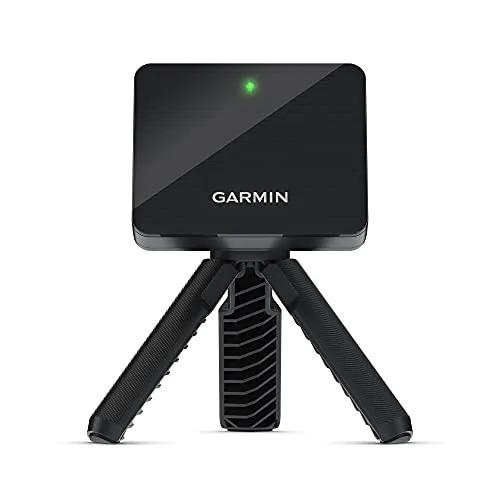
Garmin Approach R10 Portable Golf Launch Monitor
Portable radar unit, 14 metrics, up to 10 hr battery, includes tripod + phone mount.
Plugged In Golf: outdoors, usually within Garmin’s ±1 mph / ±5 yd tolerances; not for club-path work (Golf Insider).
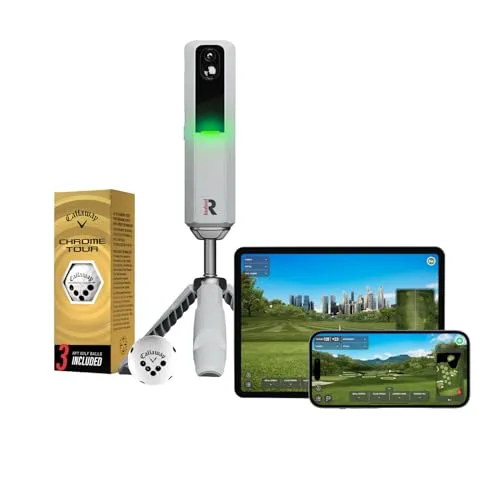
Rapsodo MLM2PRO Mobile Launch Monitor + Simulator
Dual-camera unit, 15 metrics, measured spin rate + axis, includes 3 Callaway Chrome Tour balls.
Breaking Eighty: “best launch monitor under $1,000” (9.5/10); spin is measured only with the marked RPT balls.
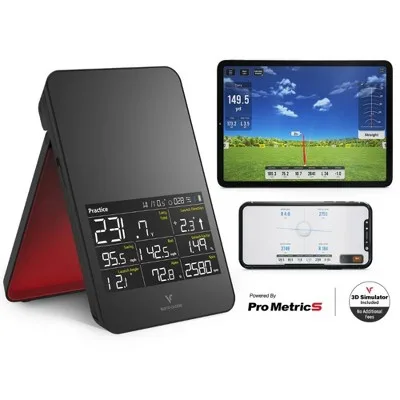
Voice Caddie Swing Caddie SC4 PRO Launch Monitor
Portable unit with a built-in screen, no monthly subscription, 5 free E6 courses.
Plugged In Golf: indoors, in line with a GCQuad on virtually every shot; wedge/driver dispersion noted by Breaking Eighty.
As an Amazon Associate we may earn from qualifying purchases; it never changes your price. Disclosure.
Portable vs. fixed: which kind do you want?
Nearly every unit on this page is portable, battery-powered or light enough to carry from the garage to the range and back. That flexibility is the whole appeal of a personal monitor: you measure at home in winter and check the numbers on real grass in summer. The Garmin R10, Swing Caddie SC4 Pro, Rapsodo MLM2PRO and FlightScope Mevo+ are all built to travel.
The trade is depth. Radar units read the ball in flight, so they sit behind you and want a deeper room; camera (photometric) units like the Square Golf, Bushnell Launch Pro and Foresight GC3 sit beside the ball and fit a shallower space, which is why a camera unit can be the right call in a tight garage even though radar units are often cheaper. A “fixed” install is really just any of these left mounted in a dedicated bay; none of them are bolted-down fixtures the way a commercial bay monitor is.
Which ones are sim-ready?
If you want to play courses on a screen, not just log numbers, the monitor has to talk to simulator software. The common platforms are GSPro, E6 Connect and Awesome Golf. Here’s where each unit lands.
- Swing Caddie SC4 ProE6 Connect and OptiShot Orion (iOS/PC)
- Garmin Approach R10Garmin Golf app (42,000+ courses w/ membership); E6 Connect and GSPro
- Rapsodo MLM2PROGSPro, E6 Connect, Awesome Golf; Premium membership adds 30,000+ courses
- Square Golf Launch MonitorGSPro, E6 Connect, Awesome Golf connect natively with no extra Square fee
- FlightScope Mevo+Owns 12 E6 Connect courses out of the box; GSPro, TGC 2019, Awesome Golf, Creative Golf 3D
- Bushnell Launch ProFSX Play/FSX Pro; GSPro and E6 Connect via a Windows PC (Gold tier + fee)
- SkyTrak+E6 Connect, TGC 2019, GSPro; integrates with every major sim platform
- Foresight GC3Lifetime FSX Play with 25 courses; no subscription requirement
Two honest cautions. Some units gate their best sim features behind a subscription (Garmin, Rapsodo Premium, Bushnell’s tiers), so the sticker price isn’t the whole cost. And a full screen room needs real ceiling height: a driver swing wants roughly 9–10 feet of clearance, which many garages don’t have. What a full sim actually costs breaks the budget down; the DIY sim build guide covers doing it yourself.
The monitor is the first piece, not the whole thing
A home setup is really just a launch monitor plus a place to swing. Buy the monitor first. It does double duty measuring your distances from day one; then add a net now and a screen later if you want to play courses. Our build-a-sim overview walks through every piece and what it costs.
When each of these came out
Six of the units on this page have a release date their manufacturer actually published. Ten current units have none at all. The lineup page sorts the datable ones newest first and quotes the evidence.
See the 2026 lineup by release dateWatching the price instead
Our price tracker shows what Amazon is charging for these units today, next to the price each manufacturer publishes. It refreshes nightly, and it makes no claim about a discount we have not recorded.
Open the price trackerFull spec pages, unit by unit
Every unit in the comparison table has its own page with the complete published spec sheet, the subscription arithmetic and the room it needs.
All launch monitor pages
Models
Comparisons
You’ve got the monitor. Now find a place to swing.
Add a net and you’ve got a range in your yard
A monitor plus a backyard net is a full practice setup you can hit into any day of the week. Here’s how to pick the net by spec.
See backyard golf nets